The 4th International Symposium on Soil Microbiome and Soil Health
发布日期:2026-09-24 浏览次数:
Experts from around the world gather in Yangling to discuss frontier issues in soil microbiome and soil health.
Yangling, China — September 24, 2026 — The Fourth International Symposium on Soil Microbiome and Soil Health was successfully held from September 18 to 21, 2026, at Northwest A&F University (NWAFU). With the joint support of the Ministry of Education and the State Administration of Foreign Experts Affairs, the event brought together international experts from the United States, Germany, the United Kingdom, Switzerland, Austria, South Korea, and other countries, as well as distinguished scholars from Chinese universities and research institutes, for in-depth discussions on frontier scientific issues in soil microbiome research.
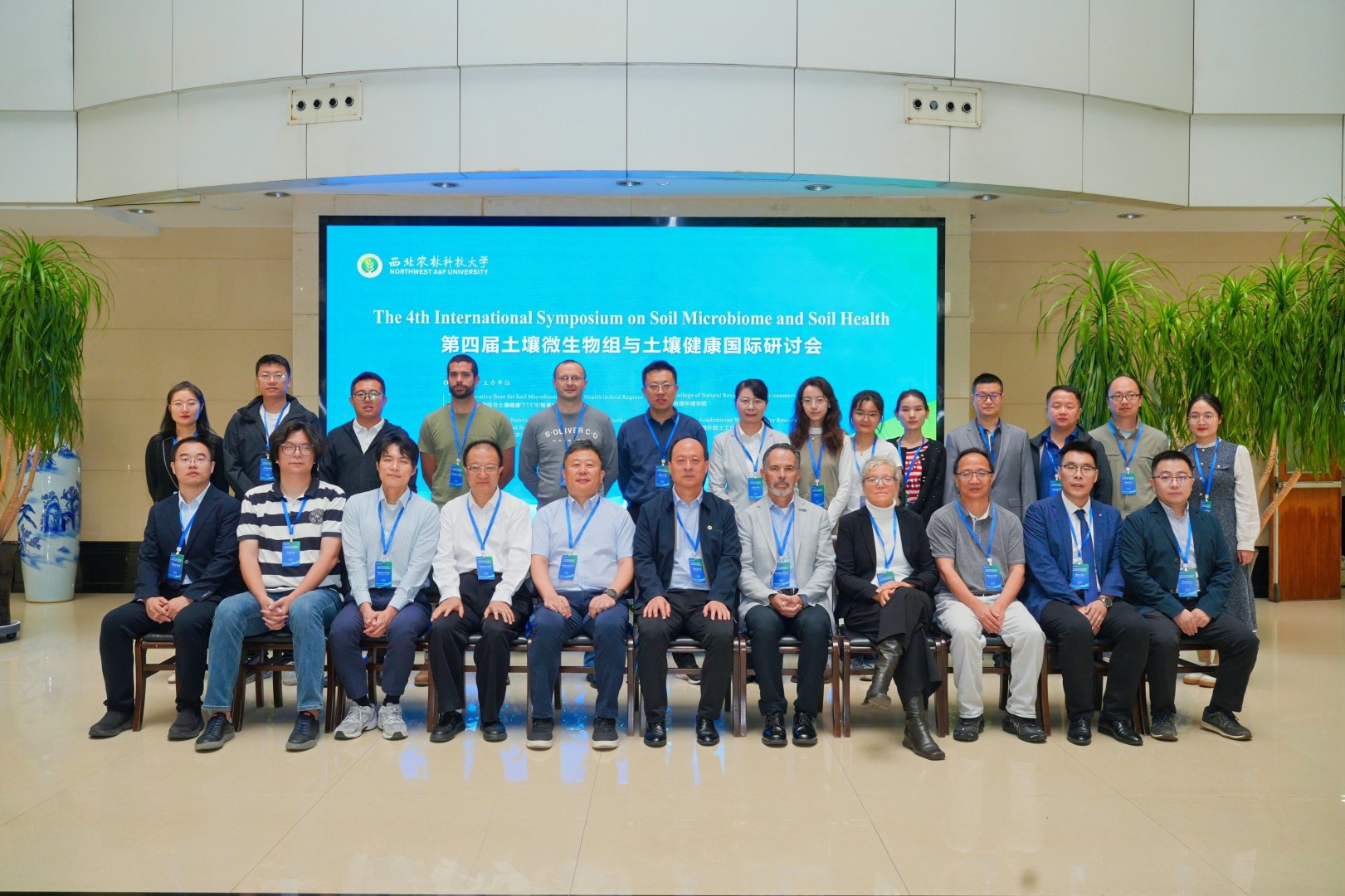
At the opening ceremony, Wei Gehong, Executive Vice President of NWAFU, and James M. Tiedje, Member of the U.S. National Academy of Sciences, delivered remarks. Wei highlighted the university’s strengths in agricultural science and technology, environmental science, and microbiology, as well as its important role in serving national strategies. He noted that international cooperation is crucial for advancing disciplinary innovation and enhancing global academic competitiveness. He expressed hope that the symposium would become an important platform for global research in agricultural and environmental microbiology, and stressed the need to further integrate research resources and increase support for higher-quality disciplinary development. Tiedje encouraged more overseas scholars to join the research efforts of the Talent Introduction Base and to jointly advance international cooperation in soil microbiome and soil health in drylands.
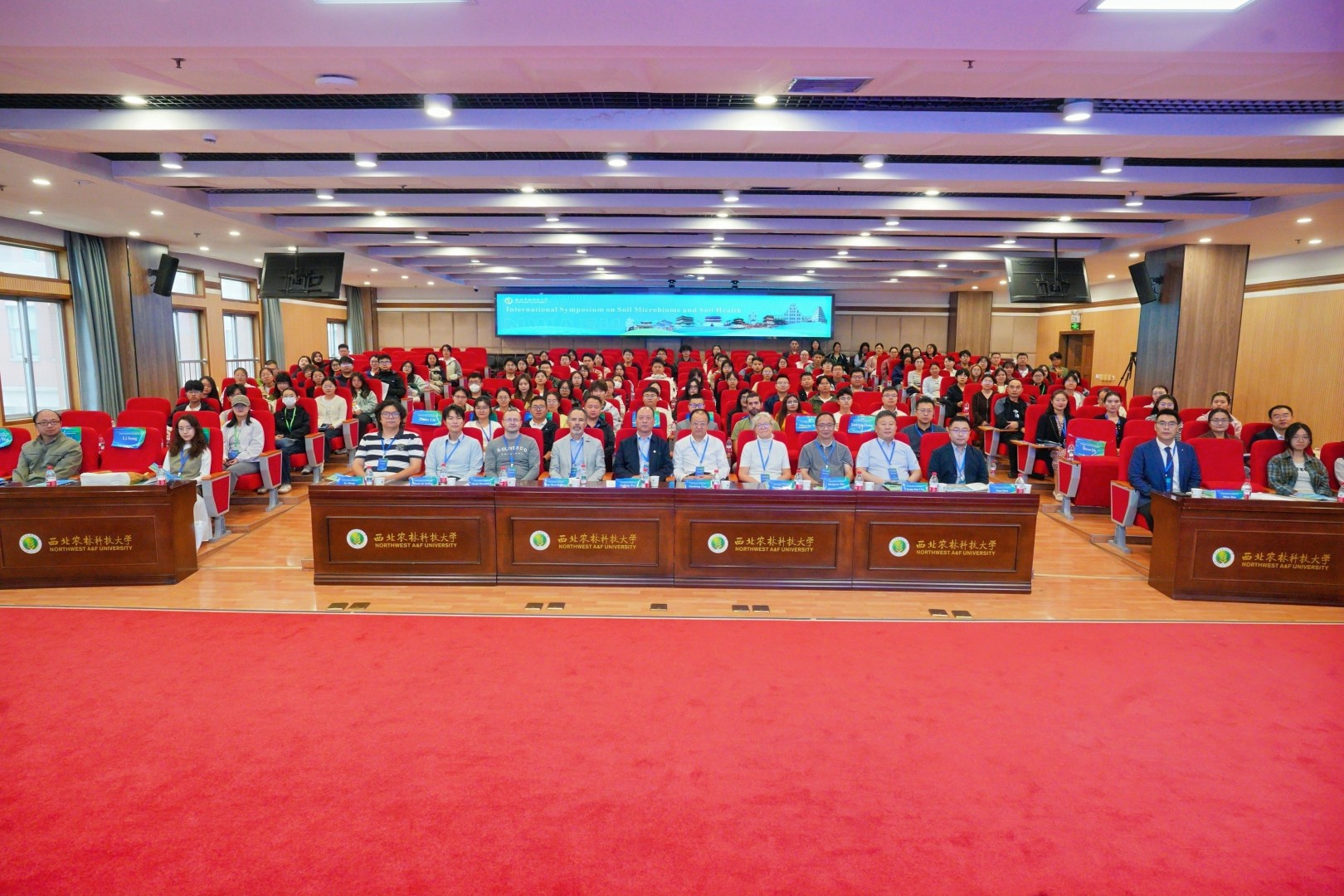
In the academic sessions that followed, Tiedje delivered an online plenary lecture titled “Past and Future of Microbial Ecology,” in which he reviewed the development of microbial ecology and outlined future research directions. The symposium featured 19 academic presentations covering soil microbiome, climate change, pollutant responses, and other topics, facilitating in-depth discussion of frontier and emerging issues in soil microbiome and soil health.
Presenters included Professor Jorge Mazza Rodrigues of the University of California, Davis; Professor Susann Müller of Leipzig University, Germany; Professor Hongyan Zhu of the University of Kentucky, USA; Dr. Maxim Dorodnikov of the University of Münster, Germany; Professor Chang-Jun Cha of Chung-Ang University, South Korea; Professor Man-Young Jung of Jeju National University, South Korea; Professor Ke Dong of Kyonggi University, South Korea; Dr. Miao Han of the University of Konstanz, Germany; Dr. Ferran Romero Blanch of Aarhus University, Denmark, and the University of Zurich, Switzerland; Associate Professor Hoon Je Seong of Jeonbuk National University, South Korea; and Research Professor Wang Miaoxiao of the University of Electronic Science and Technology of China. They shared their latest research findings and insights.
More than 200 NWAFU faculty members and students attended the symposium. Tian Xiaohong, Party Secretary of the College of Natural Resources and Environment, introduced the college’s research achievements and international cooperation in soil science, environmental science, and sustainable agriculture. Professors Zhang Yuzhou, Jian Jinshi, Qian Xun, Ren Chengjie, and Fan Lichao, along with Associate Professors Zhang Xuechen and Qiu Xinran, also delivered presentations on frontier topics including soil microbial community assembly, antibiotic resistance genes, soil carbon cycling, and root tropism. The program also included Flash Talk sessions and a poster presentation session, providing a platform for young scholars and graduate students to showcase their latest research.
This year’s symposium coincided with a critical stage in the implementation of the “Soil Microbiome and Soil Health in Drylands” project under the Discipline Innovation and Talent Introduction Program. Its success not only further promoted international academic exchange in soil microbiome and soil health but also laid a solid foundation for future multilateral research collaboration. NWAFU will continue to contribute its expertise and strength to addressing soil health challenges in drylands, advancing green agricultural development, and protecting ecosystems.